Crown reduction in Pinner
If you are looking for crown reduction in Pinner, you may already know that a tree can become too tall, too wide, or simply too dominant for the space it is growing in. Perhaps it is beginning to block light from your garden, overhanging a roof, brushing against a neighbouring boundary, or making access awkward for vehicles and pedestrians. In a built-up area like Pinner, where mature trees sit beside family homes, shops, offices, and shared access routes, careful tree work needs to be done with thought and precision.
Crown reduction is a skilled tree surgery service designed to reduce the overall size of a tree while keeping its natural shape as much as possible. It is not the same as topping or harsh cutting. Done properly, it helps maintain a healthy tree, improve balance, reduce pressure on branches, and make the tree more suitable for the surrounding property. For local residents, landlords, managing agents, and business owners, it can be the difference between keeping a valued tree and having to consider more drastic action later on.
Local knowledge matters when it comes to tree work in Pinner. Many properties in the area have established gardens, close neighbours, mature boundary trees, narrow side access, and a mix of brick walls, fencing, outbuildings, and overhead constraints. A professional local team understands how to plan the work safely, work neatly, and minimise disruption. If you need advice, a quote, or a visit to assess your tree, contact us today to discuss the best approach for your property.
What crown reduction means and when it is recommended
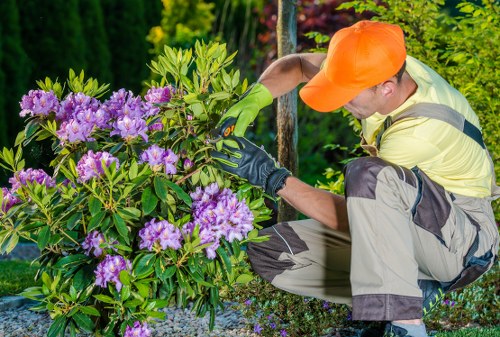
Crown reduction involves shortening selected branches throughout the tree’s canopy so that the height and spread are reduced in a controlled way. The aim is to leave the tree looking natural and balanced, rather than heavily cut back. This is typically used when a tree has outgrown its space, when branches are becoming too heavy, or when the crown is starting to interfere with nearby structures, overhead wires, or neighbouring properties.
In practical terms, crown reduction can help with light levels, clearance, and wind resistance. A more compact crown can reduce the load on the trunk and major limbs, which may be especially useful after prolonged wet weather or when a tree has developed a broad, dense canopy. It can also help bring a tree back into proportion with the garden or building around it.
For local customers asking about tree crown reduction in Pinner, the most common reason is simply that the tree has become too large for its setting. That may mean branches are shading a patio, reducing natural light in the home, affecting a lawn or planting area, or making the garden feel enclosed. In front gardens, it can also improve sight lines and make the property feel more open and welcoming.
Why Pinner properties often need careful tree reduction

Pinner has a mix of property styles, from period houses and larger family homes to smaller plots, apartment developments, schools, commercial premises, and landscaped communal areas. Many of these settings feature mature trees that were planted years ago, long before current spacing and access needs became an issue. As trees grow, their canopies can begin to affect more than one property, especially where boundaries are close together.
In streets with tight parking, limited side access, or shared drives, tree surgery has to be planned around everyday life. Branches may need to be lowered carefully, equipment may need to be brought through narrow passages, and waste removal needs to be handled without blocking neighbours or damaging paving. A local team that regularly works in and around Pinner is better placed to manage those practical details with less disruption.
There is also the question of how the tree fits with the character of the area. Many homeowners want to preserve the mature, established feel that trees bring, while making sure they do not overwhelm the space. Professional crown reduction can often strike that balance, keeping the tree healthy and attractive while making it more suitable for its environment.
Benefits of crown reduction for homeowners and businesses

There are several reasons customers choose this service. The most obvious is usually size control, but the benefits can go much further. A well-executed reduction can improve the tree’s relationship with the property, reduce nuisance, and support the overall appearance of the garden or grounds.
Common benefits include:
- Improved light into the home, garden, or commercial frontage
- Better clearance from roofs, windows, fences, walls, and pathways
- Reduced risk of branches rubbing, snapping, or interfering with structures
- A tidier and more balanced shape
- Less wind resistance in exposed or open locations
- Better use of outdoor space for seating, planting, parking, or access
- Help in managing a tree that is becoming too dominant for its setting
For commercial customers in Pinner, a crown reduction can also be important for presentation and practicality. Tree canopies that hang too low over entrances, car parks, service yards, or footpaths may affect customer access and site appearance. For landlords and managing agents, keeping trees in check may also help reduce complaints from tenants or neighbouring occupiers.
Good tree surgery should always work with the tree, not against it. That means making reduction cuts at appropriate points, preserving strong branch structure, and avoiding unnecessary stress. A careful approach helps maintain the tree’s condition for the long term.
How a professional crown reduction is carried out
A proper crown reduction starts with an assessment. The tree is looked at for species, age, shape, condition, previous pruning history, and location. The surrounding area is also important: nearby buildings, power lines, foot traffic, parked cars, fencing, and access routes all affect how the work should be planned. This is especially relevant in Pinner, where many sites have tight boundaries and everyday use around the tree.
Once the assessment is complete, the team identifies the branches that need shortening and the points where cuts should be made. The intention is usually to reduce the height and spread evenly, keeping the finished tree stable and visually balanced. Where possible, pruning cuts are made back to suitable secondary growth points so the tree continues to look natural rather than overworked.
The work is then carried out using safe tree surgery methods. Depending on the size and position of the tree, this may involve climbing, rigging, sectional lowering, or controlled access equipment. Branches are removed in stages, debris is cleared as the work progresses, and the site is left tidy once the pruning is complete. If you are arranging crown reduction services in Pinner, a clear plan and careful execution are what help the result look professional and neat.
What is included in the service?

Different trees and properties need different levels of work, but a typical crown reduction service may include several key steps. This is useful for customers who want to know exactly what they are paying for and what to expect on the day.
Usually, the service may include:
- A site assessment of the tree and surrounding area
- Advice on whether crown reduction is suitable, or whether another pruning method would be better
- Controlled reduction of the canopy to the agreed size and shape
- Removal of dead, damaged, or awkwardly placed branches where appropriate
- Safe handling of waste branches and foliage
- Basic tidy-up of the work area after completion
Some customers only need a modest reduction to bring the tree back under control, while others may need more involved work because the tree has not been managed for years. The right level of pruning depends on the species, condition, and location of the tree, as well as the result you want to achieve.
It is worth noting that a reputable local company will not promise an instant one-size-fits-all result. Instead, they will explain what is achievable without compromising the tree’s health or appearance. That conversation matters, especially for valuable mature trees.
Why choose a local company for crown reduction in Pinner?

When you are arranging tree work, a local company offers practical benefits that go beyond convenience. Pinner has a range of roads, property layouts, and access conditions, and a team that works in the area regularly is more likely to understand those local challenges. That can make the whole experience smoother, from the first site visit to the final clearance.
Here are some of the main reasons local customers prefer a nearby team:
- Faster, easier site visits for quotes and assessments
- Better understanding of local access and parking limitations
- Experience working around neighbouring homes and shared boundaries
- Familiarity with common property types and mature garden trees
- More practical scheduling for residential and business customers
- Clear communication about what the work involves
For homeowners, that local knowledge can reduce disruption. For businesses, it can help plan tree work around opening hours, deliveries, staff movement, and customer access. In both cases, the aim is the same: carry out the pruning safely and neatly, with as little inconvenience as possible.
Choosing a local service is also useful when follow-up advice may be needed. If the tree needs future monitoring, seasonal maintenance, or additional pruning at a later stage, having a team that knows the site can save time and uncertainty.
Types of trees that may benefit from crown reduction
Many tree species can be reduced, but not every tree should be treated in exactly the same way. The species, growth habit, and response to pruning all matter. Some trees tolerate reduction better than others, and the final approach should always suit the tree rather than forcing it into a shape that does not fit.
In and around Pinner, crown reduction may be requested for trees in gardens, driveways, communal grounds, school sites, or business premises. Customers often ask for work on trees that are becoming too tall near houses or spreading too far over a boundary. In some cases, the tree may be blocking a view or interfering with solar access, while in others the issue is simply that the canopy has become too dense.
Where a tree has older pruning scars or previous reductions, the current condition needs careful review. A thoughtful arboricultural approach helps decide whether a light reduction, a more targeted canopy adjustment, or another form of pruning would be the best option. That is why a site visit is so important.
Examples of situations where it may help
- A large garden tree shading a conservatory or kitchen window
- Branches touching roof tiles or guttering
- Canopy spread interfering with a neighbour’s boundary
- Tree height becoming too large for a narrow rear garden
- Commercial trees hanging over an entrance or parking area
- Mature trees needing proportionate reshaping after years of growth
Preparing for your appointment or quote
Before the work takes place, a little preparation can help the visit run smoothly. This is especially useful if the tree is in a busy part of the garden, near a driveway, or close to shared access. Most customers want the process to be straightforward, and a few simple steps can make a real difference.
Preparation checklist:
- Move vehicles away from the working area if possible
- Keep pets and children clear of the site on the day of work
- Provide access to gates, side passages, or rear garden entries
- Remove fragile garden items, furniture, or ornaments near the tree
- Let neighbours know if branches may briefly pass over a boundary
- Highlight any known issues such as underground services, weak fences, or shared paths
For commercial premises, it may also help to identify the best time for the work so staff and customers can continue using the site safely. Morning, off-peak, or scheduled maintenance periods often work well, depending on the nature of the property.
If access looks difficult, do not worry. Many local tree jobs involve tight spaces, awkward angles, or limited room for equipment. A professional team can often adapt the method to suit the property, provided the constraints are known in advance.
Pricing factors for crown reduction
Every tree and site is different, so pricing for crown reduction depends on several practical factors rather than a single standard figure. Customers often want to understand what affects the cost before they request a quote, and that is a sensible question to ask.
Typical factors include:
- The size and height of the tree
- The thickness and spread of the crown
- Species and how it responds to pruning
- Access to the tree and space for equipment
- Whether branches need to be lowered carefully rather than simply removed
- The amount of waste to be cleared away
- Any extra complications, such as restricted parking or nearby structures
In a place like Pinner, access can be one of the biggest considerations. A tree that looks straightforward from the front may be far more complex if all work has to be carried out through a narrow side passage or over a garden with limited set-down space. That does not necessarily mean the job is difficult, but it does mean a proper assessment is worthwhile.
When comparing options, look for clear explanations rather than quick promises. A good quote should tell you what work is being done, what is included, and how the site will be left once the pruning is complete.
What affects the final approach more than the price?
Sometimes the most important issue is not the cost but the method. For example, a tree may need only a light reduction in one area to preserve shape, while another may need work distributed across the canopy to prevent imbalance. The right approach should be based on the tree’s condition and the customer’s goals.
Residential and commercial crown reduction in Pinner
Homeowners are often the first to notice when a tree is becoming too large, particularly if it affects light, privacy, or garden usability. In residential settings, crown reduction can restore balance between a mature tree and the space around it. This can be useful in back gardens, front gardens, driveways, and boundary areas where space is limited.
Commercial customers may have different priorities. On office sites, retail premises, schools, care facilities, hospitality venues, and communal developments, the concerns may be safety, access, presentation, or ongoing maintenance. Trees near signs, entrances, car parks, and footways often need periodic attention to stay manageable and safe for users of the property.
Whatever the setting, the goal is to carry out the work efficiently and responsibly. That means considering how the tree affects the wider site, how the work will be staged, and what level of reduction will provide the most practical long-term benefit. Good tree care should support the way you use the property.
Areas covered around Pinner
Customers looking for tree surgery in Pinner often live or work in nearby parts of North West London and the surrounding districts. A local team can usually cover a wider area while still providing the responsiveness and familiarity that come with being based nearby.
Nearby locations may include:
- Pinner Village
- Pinner Green
- Hatch End
- North Harrow
- Harrow Weald
- Rayners Lane
- Eastcote
- Ruislip
- West Harrow
- Headstone Lane
This matters because many customers have properties that border these areas, or they may manage several sites across them. Having one local team for crown reduction, pruning, and related tree maintenance can make planning much simpler over time.
How often should a tree be reduced?
There is no single timetable that suits every tree. Some trees need only occasional attention, while others grow quickly and may need earlier follow-up. The right frequency depends on the species, growth rate, age, site conditions, and what the customer wants to achieve.
For example, a fast-growing tree near a boundary may need regular maintenance to keep it under control, while a slower-growing specimen in a spacious garden may only need occasional structural pruning. If the tree has already been reduced once, the timing of the next visit should be based on how well it is recovering and whether the growth pattern is still suitable.
A well-managed tree should not be cut repeatedly without purpose. A local arborist can advise whether a lighter future trim, a maintenance prune, or a pause before the next reduction would be best for the tree and your property.
FAQs about crown reduction
Will crown reduction damage my tree?
When done properly, crown reduction is a controlled tree surgery method that aims to preserve health and structure. Poor pruning can cause problems, which is why technique and judgement matter so much.
Is crown reduction the same as topping?
No. Topping is a harsh and inappropriate form of cutting that can leave a tree stressed and misshapen. Crown reduction is a more selective process that shortens the canopy while keeping the tree’s natural form in mind.
Can all trees be reduced?
Not every tree responds well in the same way. Some species tolerate reduction better than others, and the tree’s condition is important. A site assessment is the best way to decide whether it is suitable.
How much can a crown be reduced?
That depends on the tree, its health, and its structure. The reduction should be reasonable and carefully planned so the tree remains balanced and does not suffer unnecessary stress.
Will the work make my garden tidier straight away?
Yes, once the reduction is complete and the waste is cleared, most gardens and grounds feel immediately lighter and more open. The exact effect depends on how dense the tree was beforehand.
Do I need permission before arranging the work?
Some trees may be protected, or certain properties may have planning-related considerations. If you are unsure, ask during the assessment so the correct checks can be made before work proceeds.
Can you work around awkward access?
Often, yes. Side passages, narrow drives, and restricted rear-garden access are common in Pinner and surrounding areas. A local team can usually plan for these conditions once they have seen the site.
What to expect when you request a quote
When you ask for a quote, the main aim is to understand the tree, the site, and what result you want. A proper quote process should feel straightforward and helpful, not rushed. It is usually best to share a few details such as the approximate size of the tree, where it sits on the property, and what the main concern is.
The next step is often a visit or assessment so the work can be inspected in person. That allows the team to see the crown density, branching pattern, access conditions, and any nearby features that may affect the pruning. It also gives you the chance to ask practical questions about how the job will be carried out.
Good tree care starts with clear expectations. You should know what the work is intended to achieve, how the tree is likely to look afterwards, and whether any future maintenance might be advisable. If the tree is valuable or has sentimental importance, that conversation is especially worthwhile.
Book crown reduction with a local Pinner team
If your tree is becoming too large, affecting light, or creating access issues, now is a sensible time to arrange an assessment. Crown reduction in Pinner can help restore balance, improve the appearance of your property, and make everyday use of the space easier again. It is also a practical way to maintain mature trees without removing them unnecessarily.
Whether you are a homeowner, landlord, facilities manager, or business owner, a local tree surgery team can provide tailored advice based on your site and the tree in question. Every property is different, and the best result usually comes from a careful plan rather than a quick cut.
Contact us today to request a free quote or discuss your requirements. If you are ready to move forward, book your service now and take the first step toward a safer, better-balanced tree.